
First recorded 'civil war' among wild chimpanzees unfolds in Uganda
11.04.2026 - 14:03 | Last Updated:
SCIENCE
A once-unified community of Ngogo chimpanzees has fractured into warring factions, launching deadly, coordinated raids that researchers say mirror the complexities of human conflict.
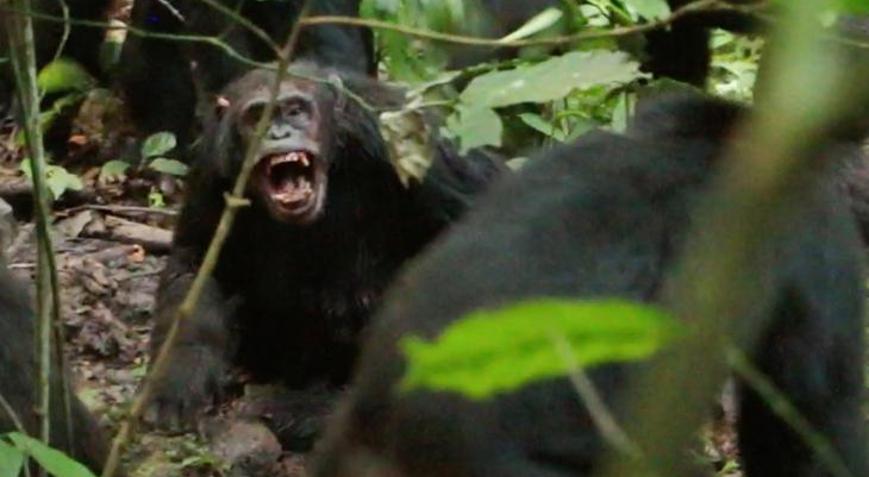
In a discovery that challenges our understanding of primate social dynamics, scientists have documented the first observed instance of a "civil war" within a wild chimpanzee community. A study published in the journal Science details how the Ngogo chimpanzees—formerly the largest known unified group of wild chimps in the world—turned on one another in a years-long, bloody conflict.
Primatologist Aaron Sandel first noticed signs of trouble in June 2015 when he observed chimpanzees acting with unusual nervousness and seeking reassurance when encountering members of their own wider group as if they were meeting dangerous strangers. While the Ngogo community had remained socially cohesive since at least 1995, a permanent split emerged by 2018, dividing the population into two distinct factions known as the western and the central chimpanzees.
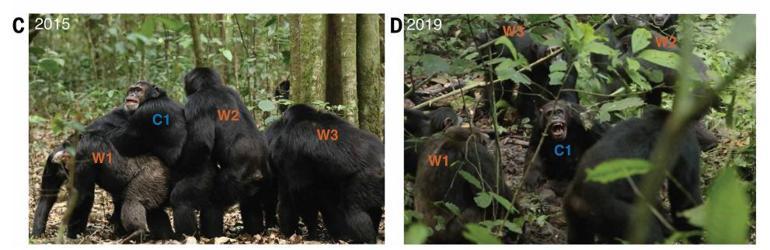
Once the groups solidified, the western faction began a systematic campaign of violence against their former companions, conducting 24 sustained and coordinated attacks over the following seven years. The toll of this internal warfare has been devastating, resulting in the deaths of at least seven adult males and 17 infants. As a result of these onslaughts, the central group now exhibits the lowest survivorship ever documented in a wild chimpanzee community.
FACTORS THAT WEAKENED THE 'SOCIAL CEMENT'
Researchers point to several factors that weakened the "social cement" of the group, such as a significant loss of status by the alpha male and the deaths of several key older individuals who maintained connections between different neighborhoods. Furthermore, a disease outbreak in 2017 is believed to have expedited the inevitable polarization of the community.
This study highlights a disturbing parallel to human behavior, as Sandel remarked that cases where neighbors kill neighbors bring these animals closer to the human condition. While genetic evidence suggests such "civil wars" naturally occur only about once every 500 years, experts warn that human interference such as deforestation, the climate crisis, and disease outbreaks could make these rare, lethal conflicts more frequent.
