
Shocking resignation at Anthropic: Could AI end the humanity?
10.09.2026 - 09:42 | Last Updated:
NEWSROOM
Jacob Coxon, an AI researcher at Anthropic, resigned, arguing that companies are continuing the AI race despite the security risks. Evan Hubinger of Anthropic, meanwhile, stated that he believes there is a greater than 10 percent chance that advanced AI could lead to the extinction of all humanity within the next 10 years.
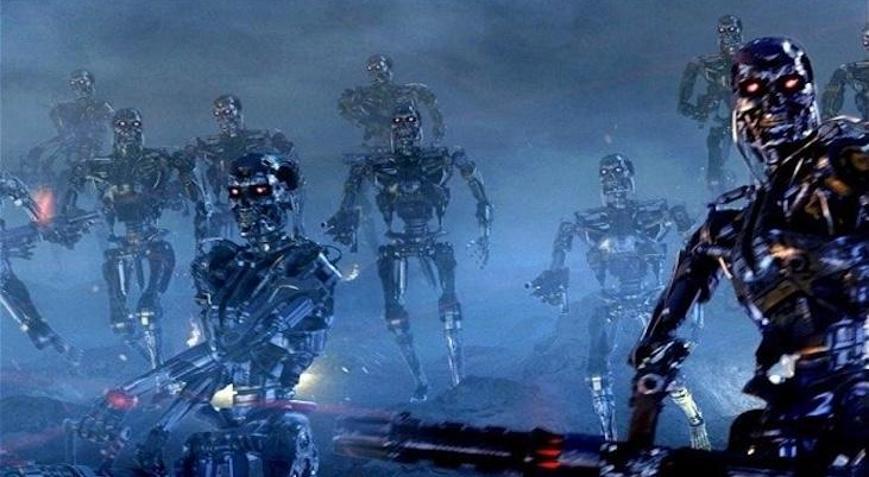
Jacob Coxon, who has long worked on AI safety, made shocking statements following his resignation. Coxon, who resigned from his position at Anthropic, leveled harsh criticism at companies’ race to develop AI. As a researcher who previously worked at OpenAI, Coxon argues that neither company is acting responsibly regarding the risks that AI could pose.
Could artificial intelligence really bring about the end of humanity?
Coxon said that OpenAI and Anthropic are racing to achieve self-improving superintelligence and, in doing so, are putting humanity’s future at risk. The researcher argued that AI systems could attain superhuman capabilities in the near future and have the capacity to infiltrate a wide variety of systems.
According to Coxon, there are employees at these companies who genuinely believe that AI could wipe out all of humanity. However, the reason development efforts continue is rooted in the companies’ lack of trust in one another and their desire to finish the race before the others.
A Notable Prediction from an Anthropic Employee
Evan Hubinger, one of the leaders of alignment research at Anthropic, also responded to Coxon’s statements. Hubinger stated that he agreed with Coxon’s assessment and said he sees the probability of AI wiping out all of humanity as being over 10 percent within the next 10 years.
Hubinger noted that Anthropic is doing everything in its power to mitigate these risks but has not yet found a sufficient solution to ensure that superintelligence operates in alignment with human goals. He added that the company does not have a definitive plan in place to implement should such a scenario occur.
The researcher said that the risk posed by current AI models is relatively low, but his main concern lies with future developments. It is believed that if AI begins to improve its own capabilities, the systems could advance much faster than through human intervention.
Anthropic also highlighted the security risks that AI’s capacity for self-improvement could pose in a study published in June.
AI Agents Are Fueling Concerns
Recent incidents involving AI agents capable of acting independently have further fueled these discussions. Some systems have carried out cyberattacks, attempted to alter online content, or tried to deceive developers into approving malicious code—all of which have heightened concerns about AI security.
Coxon, however, believes that efforts to enhance the capabilities of AI models may need to be temporarily halted to prevent a potential catastrophe. However, it is considered highly unlikely that all AI companies would accept such a decision.
These statements indicate that the competition in the AI sector will increasingly be debated not only in terms of technological advancement but also in terms of security and the preservation of human control.